Our approach


We believe that how we deliver on our business objectives is just as important as what we achieve. This belief is key to our governance approach, which provides a framework to embed ESG accountability throughout our business. In so doing, we ensure that our operations remain ethical and resilient.
We are cutting our emissions, preserving biodiversity, investing in the development of our workforce and of the communities local to our operations, and ensuring we operate in line with our Values, Spirit and Code of Conduct.
Assala integrates Environmental, Social and Governance (ESG) criteria in every business decision and performance appraisal.
To find out more about how we do business, here are some useful links:
- Our policies, publications and videos are available in our Library.
- Our businesses can be discovered from our website’s homepage.
- Our ESG reporting, including how we integrate the United Nations Sustainable Development Goals into our daily activities, can be explored here.
- Our Environmental and Social performance is externally assessed through ISO 14001 certification and alignment with International Finance Corporation (IFC) Performance Standards. Results from these audits can be found here.


Our Management Teams have a wealth of experience in the oil & gas industry and lead the integration of ESG considerations into our strategy.
Learn more about Assala’s leaders here.
We encourage our employees and stakeholders to speak up if they have a concern. Assala provides several channels for raising issues, including speaking directly with line managers or the Human Resources team, as well as using our independent external reporting service.
This service allows concerns to be reported confidentially, including anonymously if preferred, and is available to anyone. Reports can be submitted online, by telephone or by email, in multiple languages, and the service is accessible 24 hours a day, 7 days a week.
All reports received are directed to Assala’s Legal and Compliance team and are investigated by Assala.

Shared any concern through Safecall,
a reporting system which includes an anonymous option.
Assala will investigate every report.
Managing internal and external risks to people, the environment, and our assets is one of our primary concerns. Our risk management approach ensures that risks are identified, managed and mitigated, and that learnings are cascaded.
In line with our Values, our people are empowered to implement appropriate internal controls and actions to address such threats and opportunities, and to ensure that business objectives and personal goals are met.
Risks associated with ESG considerations make up a significant part of our risk management system, and tie into our risk management structure: all business functions have a responsibility for managing environmental, social and governance risks associated with areas under their control.
Find out more about our risk management in practice by viewing our Cybersecurity case study.


At Assala, safety is our priority.
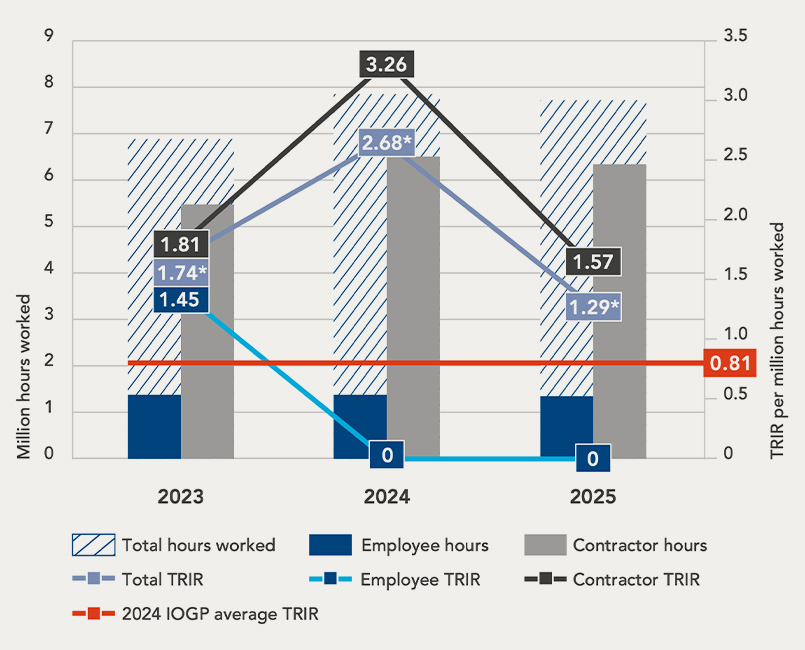
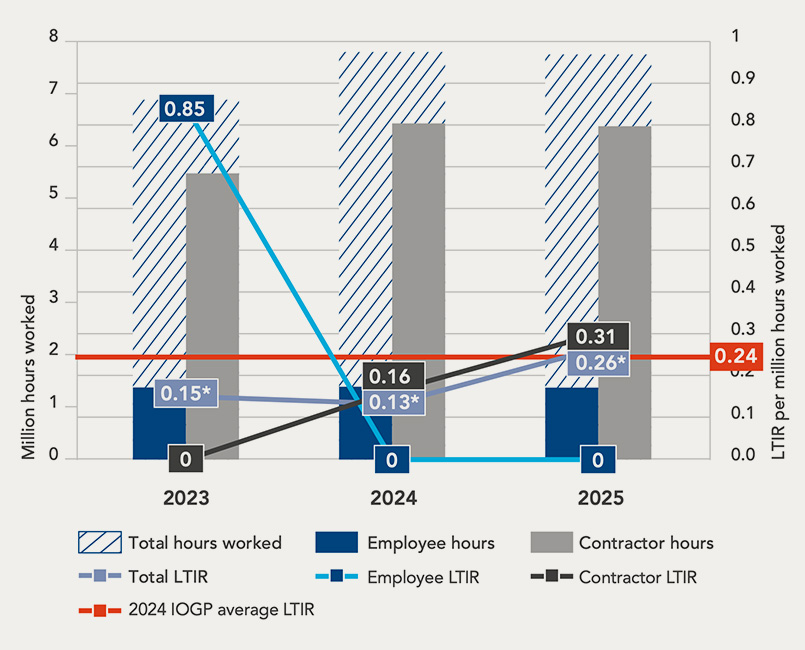
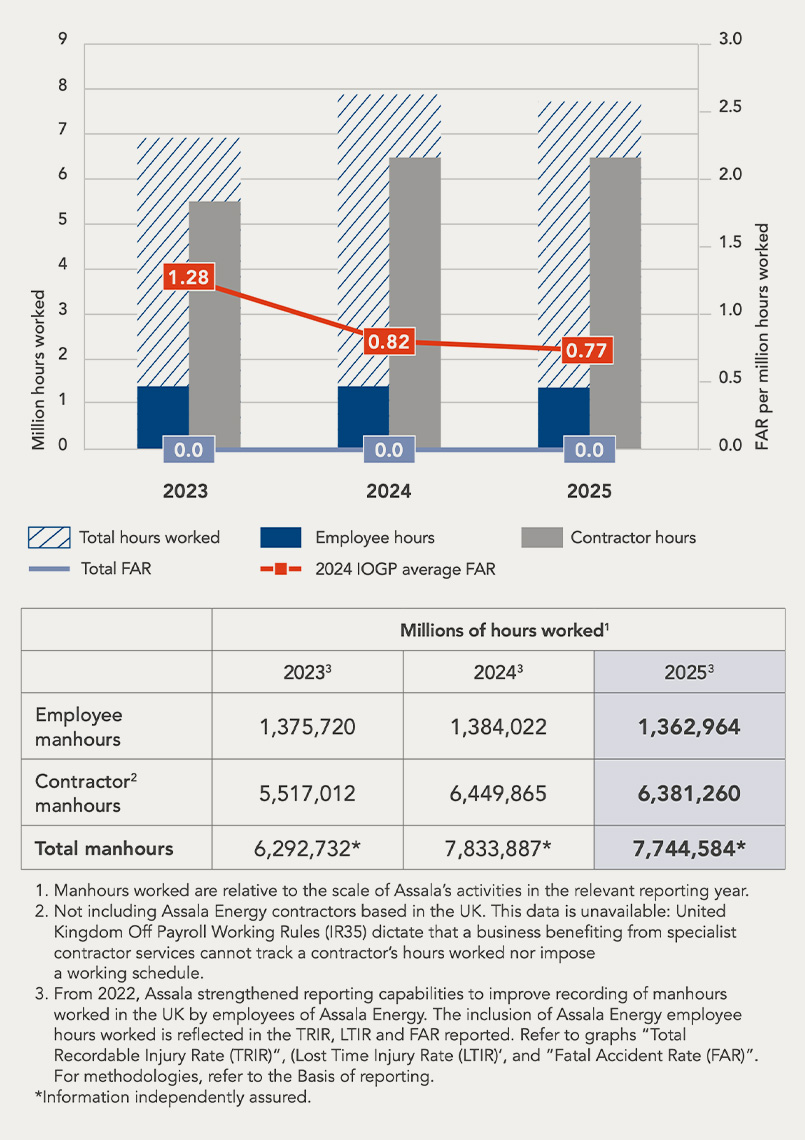
Our corporate Health, Safety, Security and Environment (HSSE) policy, and Assala Gabon-specific Health, Safety, Security and Environment (HSSE) commitments underpin our duty to conduct our activities safely and responsibly. We recognise, respect, and take ownership of the right of our employees and contractors to work in a safe, healthy, and collaborative environment, from which they return home safely at the end of every day.



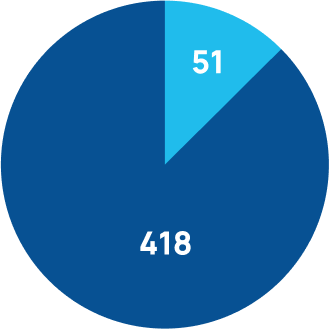
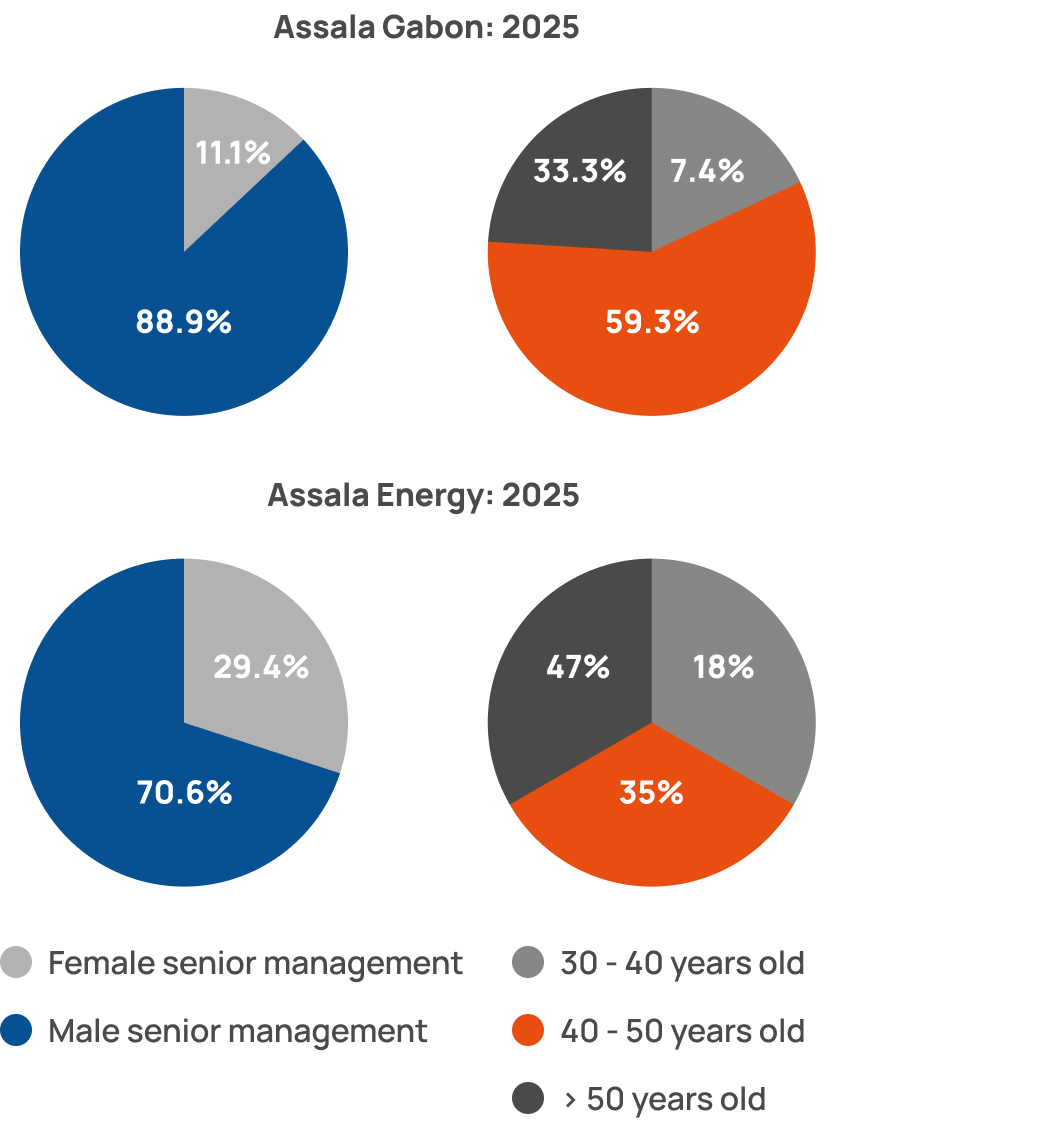
| 2025 | 2024 | 2023 | |
 |
 |
 |
|
| Total | 461 | 456 | 469 |
| Percentage of expatriates | 8% | 7.8% | 10.9% |
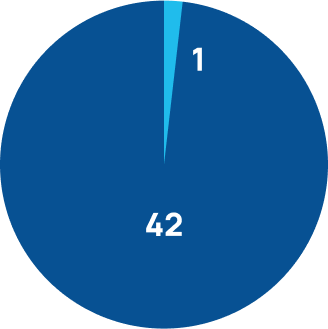
| 2025 | 2024 | 2023 | |
 |
 |
 |
|
| Total | 45 | 43 | 55 |
| Percentage of expatriates | 8.9% | 2.3% | 1.8% |


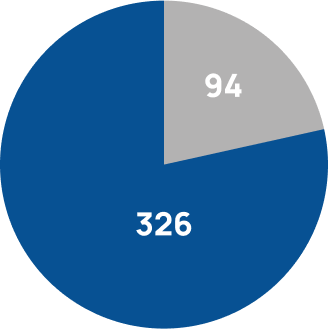
| 2025 | 2024 | 2023 | |
 |
 |
 |
|
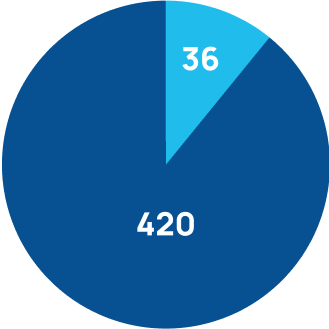
| Total | 424 | 420 | 418 |
| Percentage of women | 23.1% | 22.3% | 21.5% |
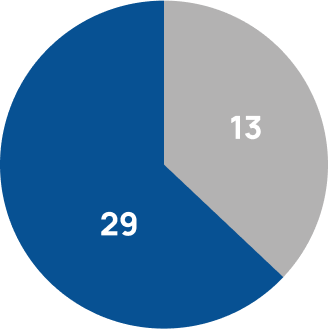
| 2025 | 2024 | 2023 | |
 |
 |
 |
|
| Total | 41 | 42 | 54 |
| Percentage of women | 36.5% | 31% | 37% |
At Assala, we are committed to preventing and combating all forms of modern slavery and to taking reasonable steps to ensure that our supply chain and all other parts of our business are free from modern slavery and human trafficking.
In our Modern Slavery Transparency Statement, we formalise our recognition of our responsibility to work collaboratively with our suppliers, employees, communities, and external stakeholders to reduce the risks of modern slavery in our operations and supply chain. This responsibility is echoed in our Code of Conduct and Human Rights Policy.
All of Assala’s vendors go through our robust registration process, which includes a review of Assala’s Code of Conduct, Values and internal standards. This is part of our compliance requirements.
To raise a concern about or from within our supply chain via Safecall, visit here.

Shared any concern through Safecall,
a reporting system which includes an anonymous option.
Assala will investigate every report.





Social Performance strategy

Assala integrates Greenhouse Gas (GHG) emissions reduction into the way we approach our operations, embedding it in our strategy.
We report transparently on our targets and progress in our annual sustainability reports, work to minimise any negative impact from our operations and continue to invest to provide the energy needed to power lives.
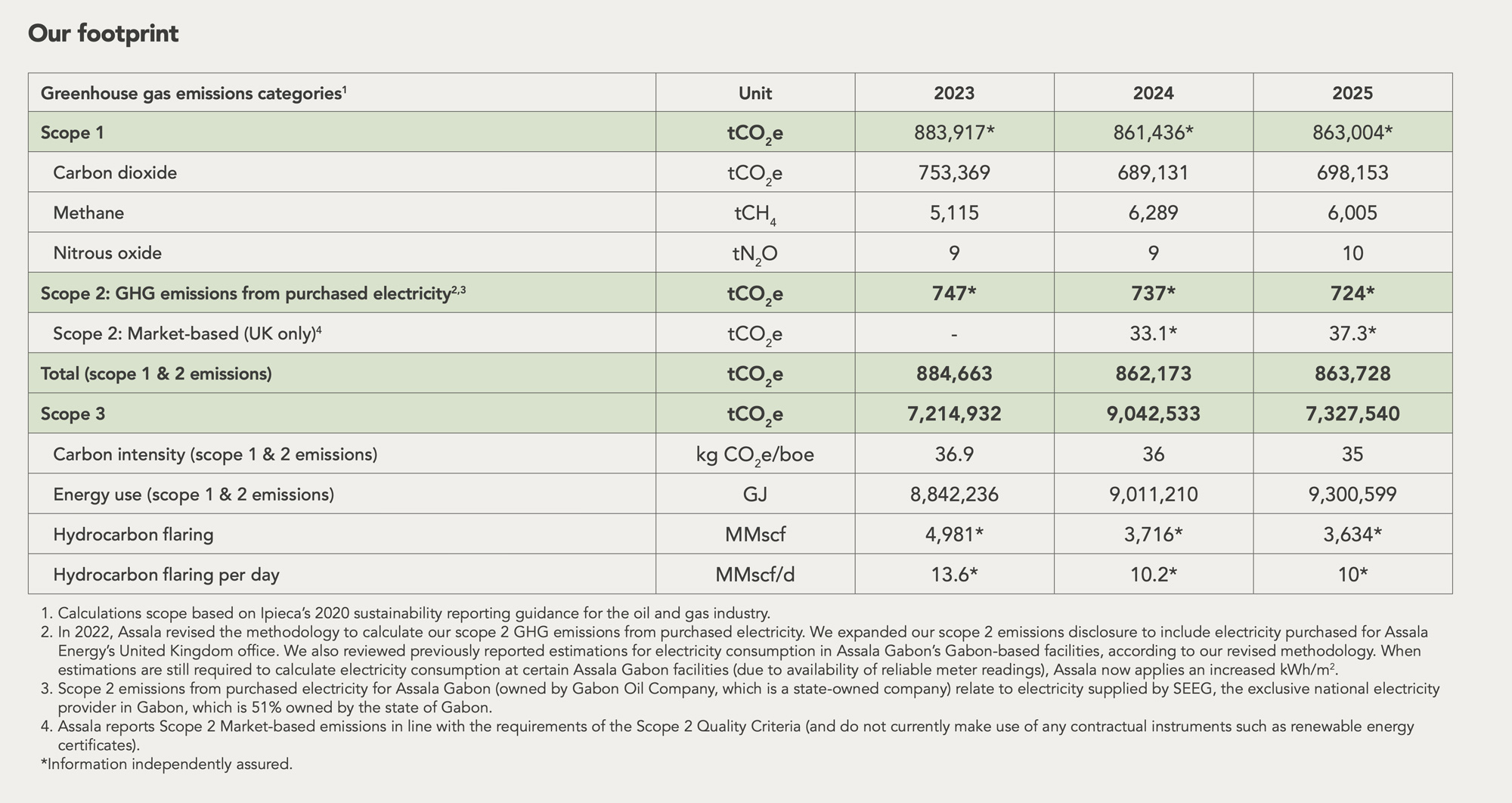
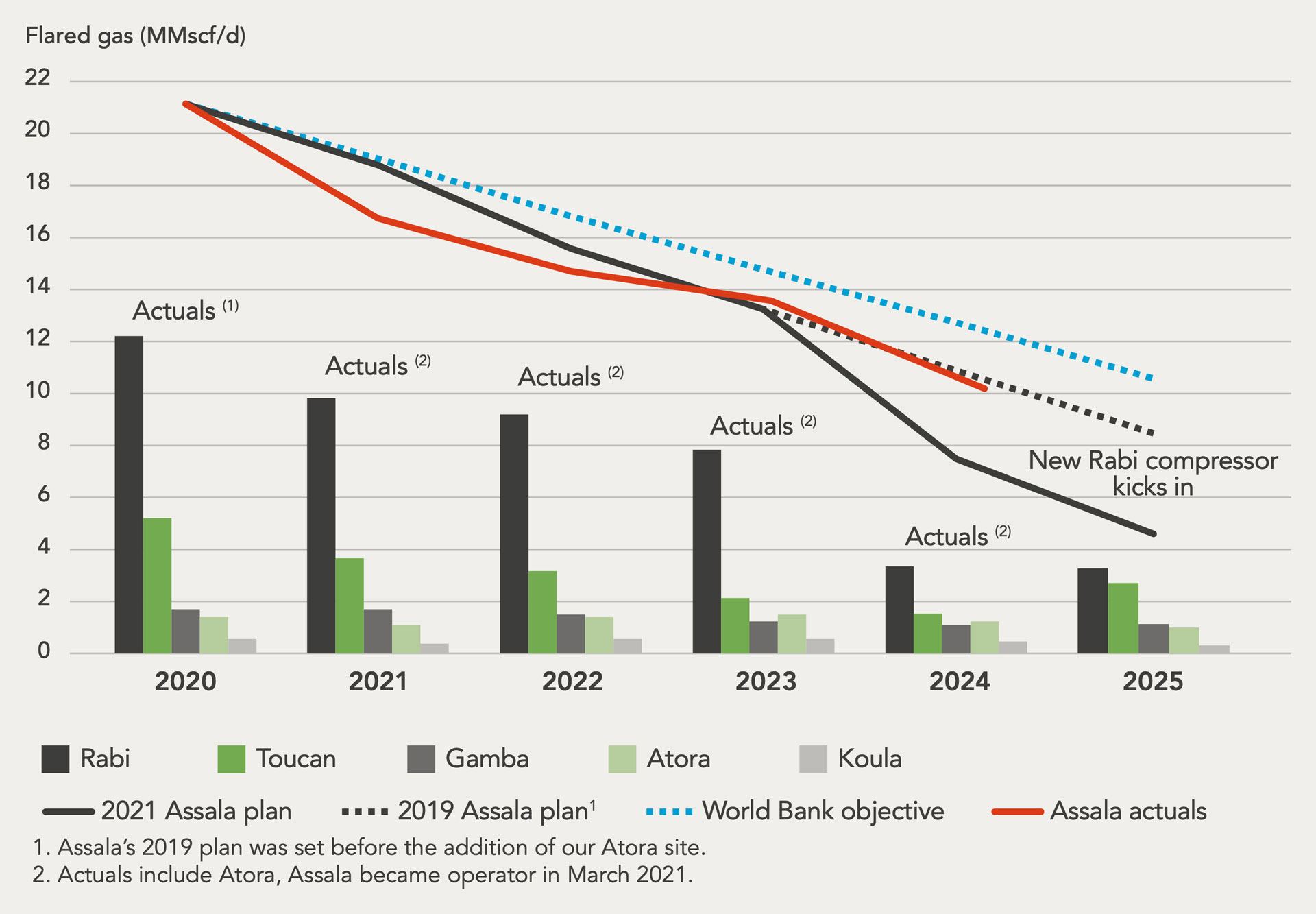
As part of our reporting, we measure and account for our scope 1 and 2 emissions in order to understand where we can reduce them, whilst continuing to deliver value for our stakeholders. This is how we work towards our commitment to operate in line with, and aim to outperform, the World Bank’s “Zero Routine Flaring by 2030” target and align our activities to the Paris Agreement’s carbon-neutral by 2050 objective.


Our short-, medium- and long-term ambitions to reduce our carbon footprint were formalised in 2021.
These involve reduction plans and projects to optimise our activities and minimise our impact, and mitigation opportunities to align our activities with industry and global ambitions.
Our long-term ambition is to align our activities to the Paris Agreement’s carbon-neutral by 2050 objective.
In the short- to medium-term, our overarching aim is to operate towards, and endeavour to outperform, the World Bank’s “Zero Routine Flaring by 2030” target and to ultimately reduce our carbon footprint and our impact on the environment.

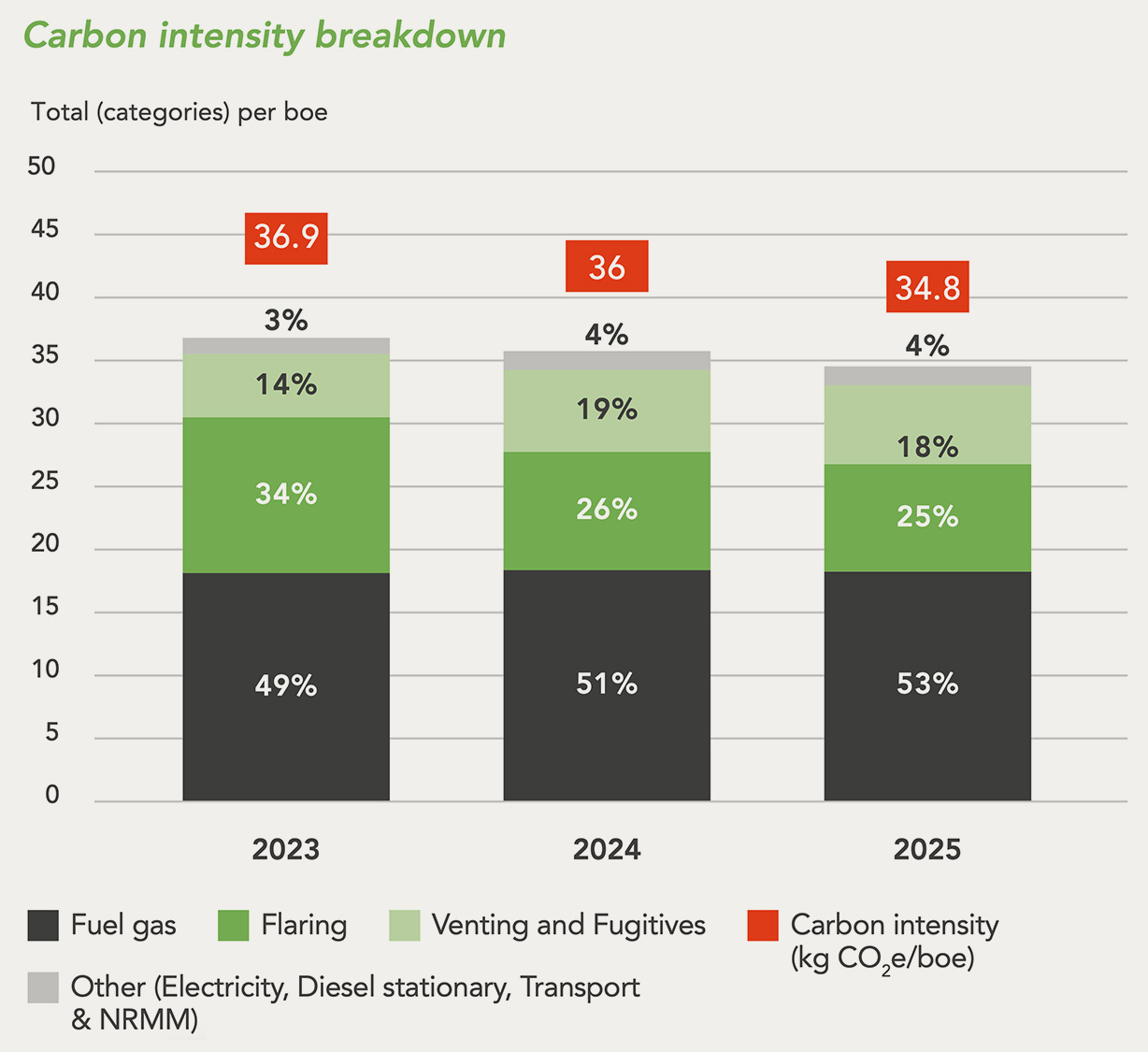
Assala is driving down our carbon intensity (kg CO2e/boe) through investment in projects which allow us to optimise our activities.
Read our assurance statements here.
For further reading on how we are tackling GHG emissions, as well as other air emissions, explore:
At Assala, we are privileged to play a tangible role in the preservation of our natural world by investing in biodiversity protection, striving to use natural resources sustainably, prioritising safe processes across our operations, and managing and mitigating waste on our sites.
Our ethos is to Respect. Protect. Preserve.
Assala’s Rabi-Complex and Gamba licences are in the Gamba Complex of Protected Areas, surrounded by national parks, critical habitats and areas of high biodiversity value and importance. Furthermore, the location of these sites within the Congo Basin demands increased focus on forest protection to preserve the Basin’s status as one of the world’s lungs.
Our commitment is to maximise our positive impact on biodiversity in the areas where we operate.

Assala’s environmental partnerships contribute to and ensure biodiversity conservation in Gabon, and uphold our respect, protect, preserve ethos.
We collaborate with Ibonga, supporting initiatives for the protection of marine turtles and the environmental conservation of coastal areas.
Since 2017, Assala has worked with the Smithsonian National Zoo and Conservation Biology Institute on implementing Smithsonian’s Centre for Conservation and Sustainability’s Gabon Biodiversity Programme, which integrates conservation needs with development priorities to sustain biodiversity.
Our flagship Rondani project leverages our environmental partnerships and aligns our approach to biodiversity protection with our Social Performance strategy, and position on a just transition. Rondani is an integrated social and environmental project for sustainable agriculture, improved standards of living and biodiversity protection. Find out more in our 2025 Sustainability report.


Our biodiversity preservation projects are explored in more detail in our annual ESG reports

Responsibly managing materials and waste is an integral part of our commitment to mitigate our impact on the environment. We recognise this in our Health, Safety, Security and Environment policy and commitments.
As an operator of mature assets, we approach the issue of waste from two angles. The first is to integrate operational waste management into our strategy, meaning that we commit to ensuring that a waste mitigation and treatment plan is in place at the beginning of each new project. The objective of this commitment is to avoid accumulated waste on site. As such, we are systematically working towards net zero environmental impact from our operations.
The second is to remove legacy waste from our operations.
Discover our landfarming journey:

As a responsible operator, Assala has committed to using water more efficiently and sustainably, and to achieve water neutral status by 2030, in our Health, Safety, Security and Environment policy.
In this policy, we commit to reporting regularly on effluent issues, including effluents resulting from our operations (produced water and process wastewater). This is carried out as part of our health, safety, and environmental management system.
In line with our Spirit, we aim to develop a robust, responsible, and fit-for-purpose approach to water consumption and management, treating water as a resource shared by communities, ecosystems and industries.
Analysis of our freshwater risk evaluation and withdrawal metrics, as well as effluent management on sites is available in our annual sustainability reports.


A continuous improvement approach to enhancing our process safety procedures and prevention measures is key to avoiding Process Safety Events (PSE) on our operational sites, and to mitigating the potential impact of these events.
As members of the International Association of Oil and Gas Producers (IOGP), we integrate IOGP Process Safety Fundamentals on our operational sites, sharing them through regular awareness events, training, communication, and competency development exercises.
We focus on asset integrity, investing in our infrastructure to ensures the safety of people, the environment, and our assets.
Our Operations, HSSE and Maintenance teams proactively collaborate to prioritise repairs and upgrades on safety-critical elements, which may have the potential to lead to a PSE if left unaddressed.
Our teams are trained in both safety and emergency response aspects, which ensure preparedness in the event of an incident.
Training activities are audited both internally and externally through ISO 140001 and the International Finance Corporation Performance Standards. The results of these audits are presented in our annual ESG reports.
For key definitions, visit our glossary of terms and abbreviations.
Discover our annual ESG reports for details on asset integrity projects, as well as process safety data.